

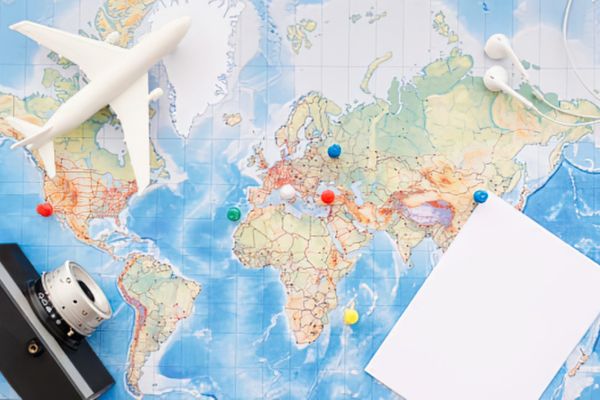
There’s a quiet kind of confidence that comes from knowing where you are, even when you’re far from home. Not the overconfident, phone-in-hand, signal-dependent kind—but something steadier. The kind that doesn’t flicker when your connection drops to zero bars in a winding mountain road or a crowded foreign city. That’s where offline maps for travelers step in, quietly transforming the way people move through unfamiliar places.
Travel has always involved a degree of uncertainty. But in recent years, we’ve grown used to solving that uncertainty instantly with a quick search or a blinking blue dot on a live map. What happens, though, when that convenience disappears? The answer often reveals just how valuable offline navigation can be.
Why offline maps still matter in a connected world
It’s easy to assume that constant internet access is a given. In reality, it’s anything but. Even in major cities, tunnels swallow signals, remote neighborhoods lag behind infrastructure, and roaming charges can make you think twice before loading anything at all.
Offline maps for travelers offer a simple but powerful alternative. They allow you to download entire regions in advance, storing detailed geographic data directly on your device. Roads, landmarks, walking paths—even some businesses—remain accessible without relying on mobile data.
There’s something reassuring about that independence. You’re not negotiating with your connection or watching your battery drain faster as your phone struggles to maintain signal. Instead, navigation becomes quieter, more predictable.
And perhaps more importantly, it puts you back in control.
The subtle psychology of navigating without signal
There’s a shift that happens when you travel with offline maps. You start to pay attention differently. Without the constant urge to refresh directions or search nearby spots in real time, your awareness sharpens.
You look up more. You notice landmarks. You remember the turn you took near the café with the red door or the narrow street that opened into a square. Navigation becomes less about following instructions and more about understanding your surroundings.
Offline maps for travelers encourage a slightly slower, more intentional kind of movement. It’s not about getting lost—it’s about being present enough that even if you do, it doesn’t feel like a problem.
Preparing your maps before the journey begins
The effectiveness of offline navigation depends largely on what you do before you leave home. Preparation isn’t complicated, but it does require a bit of foresight.
Downloading maps ahead of time means choosing the right areas. Not just your destination city, but surrounding regions too—especially if your plans include day trips or unexpected detours. A traveler arriving in a new country might only think to download the capital, only to realize later that the countryside or nearby towns aren’t covered.
Storage space becomes part of the equation as well. Detailed maps can take up more room than expected, particularly when you include multiple regions. But this is a small trade-off compared to the convenience they offer once you’re on the ground.
There’s also the matter of updating maps. Roads change, businesses open and close, and while offline maps remain functional without updates, refreshing them before departure ensures better accuracy.
How offline maps shape different travel styles
Not all travelers use maps the same way, and offline navigation adapts surprisingly well across different styles.
For city explorers, it acts as a safety net. You can wander freely through unfamiliar neighborhoods, knowing that you’ll always find your way back to your accommodation without needing to stop for Wi-Fi.
For road trippers, offline maps are almost essential. Long stretches of highways or rural routes often lack reliable coverage, and losing navigation mid-journey can be more than just inconvenient. With offline access, directions remain steady, even when the landscape feels endless.
Then there are those who travel slowly—backpackers, hikers, or anyone drawn to less predictable routes. For them, offline maps become something closer to a companion. They don’t just guide; they reassure.
Limitations worth understanding
Offline maps aren’t perfect, and recognizing their limitations is part of using them effectively.
Real-time updates are the most obvious absence. Traffic conditions, sudden road closures, or public transport delays don’t translate well into offline environments. What you see is a snapshot, not a live feed.
Search functionality can also be more limited. While major landmarks and streets are usually available, smaller or newly added places might not appear. This can occasionally lead to moments of confusion, especially in rapidly changing urban areas.
There’s also a reliance on your device itself. If your phone runs out of battery, your offline maps go with it. That dependency shifts the responsibility back to you—charging your device, carrying a backup power source, and managing usage carefully.
Still, these limitations don’t outweigh the benefits. They simply reshape how you approach navigation.
Finding balance between online and offline navigation
The smartest travelers don’t choose one over the other. They combine both.
Online maps offer dynamic information—live traffic, updated business listings, real-time transit routes. Offline maps provide stability when those features aren’t available. Together, they create a more resilient navigation system.
A common approach is to use online maps while planning routes in a connected environment, then rely on offline maps while moving through the destination. This balance allows you to benefit from real-time insights without being entirely dependent on them.
It’s a subtle shift in mindset: from relying on constant access to building a fallback that works just as well when access disappears.
The role of offline maps in safer travel
Safety in travel often comes down to awareness and preparedness. Offline maps quietly support both.
Knowing your location at all times reduces the anxiety that can come with unfamiliar surroundings. It minimizes the need to ask for directions in situations where you might feel uncomfortable, and it helps you avoid wandering too far off course unintentionally.
In more remote areas, the importance becomes even clearer. When there’s no network to rely on, having a downloaded map can mean the difference between confidence and uncertainty.
Offline maps for travelers don’t just help you reach places—they help you feel secure while doing so.
Small habits that make a big difference
Using offline maps effectively isn’t just about downloading them. It’s about how you integrate them into your travel routine.
Checking routes before you leave your accommodation can save time and reduce confusion later. Zooming in on key areas helps familiarize you with the layout, making navigation feel more intuitive.
Marking important locations—your hotel, nearby landmarks, or meeting points—creates a mental map that complements the digital one. Even without an internet connection, these reference points make moving around easier.
And then there’s the habit of occasionally looking up from your screen. It sounds simple, but it changes everything. Offline maps work best when they support your awareness, not replace it.
A quieter, more grounded way to travel
There’s something refreshing about traveling without the constant hum of connectivity. Offline maps play a small but meaningful role in that experience.
They don’t demand attention. They don’t update every second or flood you with options. Instead, they sit quietly in the background, ready when you need them.
In a way, they restore a balance that modern travel sometimes loses. You still have guidance, but you’re not overwhelmed by it. You still know where you’re going, but you’re free to notice everything along the way.
Conclusion: navigating with confidence, not just connection
Offline maps for travelers aren’t about replacing technology—they’re about using it more thoughtfully. They offer a form of navigation that doesn’t depend on perfect conditions, one that continues to work when everything else pauses.
In a world where travel often feels tied to signal strength and battery life, that reliability stands out. It gives you the freedom to explore without hesitation, to take detours without worry, and to move through unfamiliar places with a quiet sense of confidence.
And sometimes, that’s exactly what makes a journey feel like your own.
